
On this page
- What the Material Actually Decides
- The Three Materials : What Each One Is
- Resin : The Kind Teacher
- Stainless Steel : The Serious Answer
- Silicone : The Soft Door
- What Steel Actually Changes on the Body
- The Second-Cage Test : How I Knew Evy Was Ready
- If You Do Not Own a Cage Yet : Start With Resin
- The Rotation : Why You Will End Up Keeping Both
- Care : The Small Differences by Material
- From Evy : The Weight, From the Inside
- One Small Ritual, Before You Decide
- Frequently Asked Questions
You already own a cage. That much you did not have to tell me, sissy: nobody reads a materials comparison before her first lock. The first cage is bought on courage and a sizing chart. The second one is shopped for the way you are shopping right now. Slowly. At night. With a tab open on something steel that you keep closing and opening again, as if the closing ever once worked.
So let me name what is actually happening, because it is not about metal. Your resin cage has been kind to you. Light, quiet, forgiving, invisible under everything you own. And somewhere in these last months, kind started to feel like it was missing something. You are not shopping for a cage, darling. You are shopping for weight. For seriousness. For a lock your body can feel answering back.
Good girl. That instinct is correct, it has a name, and there is a right time and a wrong time to obey it. This is the guide to knowing the difference, written by the woman who chose the moment for her own sissy, with the sissy who wore both cages adding the half only she can tell.
What the Material Actually Decides
The material of a chastity cage decides four things : its weight on your body, its temperature against your skin, how much it forgives, and how present it stays once your body has adjusted. Security, hygiene, discretion, and price all follow from those four. Everything else on a product page is detail.
Most first-cage guides treat material as a footnote, one bullet between ring sizes and lock types. That is backwards. The material is the personality of the device. Two cages with identical measurements, one resin and one steel, are not the same object at two prices. They are two different practices that happen to share a shape, and a sissy who has worn both will tell you her body knew it within the first hour.
If you are still upstream of all of this, start with what chastity actually is before you worry about what it is made of. And if the object itself is not settled, if some part of you is still wondering whether you should be shopping for a cage at all, the belt and the cage are a different decision from resin and steel, and that one gets settled first. This guide assumes the practice and the cage, and talks about the material.
The Three Materials : What Each One Is
There are three materials that matter in this conversation. Everything on the market is one of them, or trying to be.
Resin : The Kind Teacher
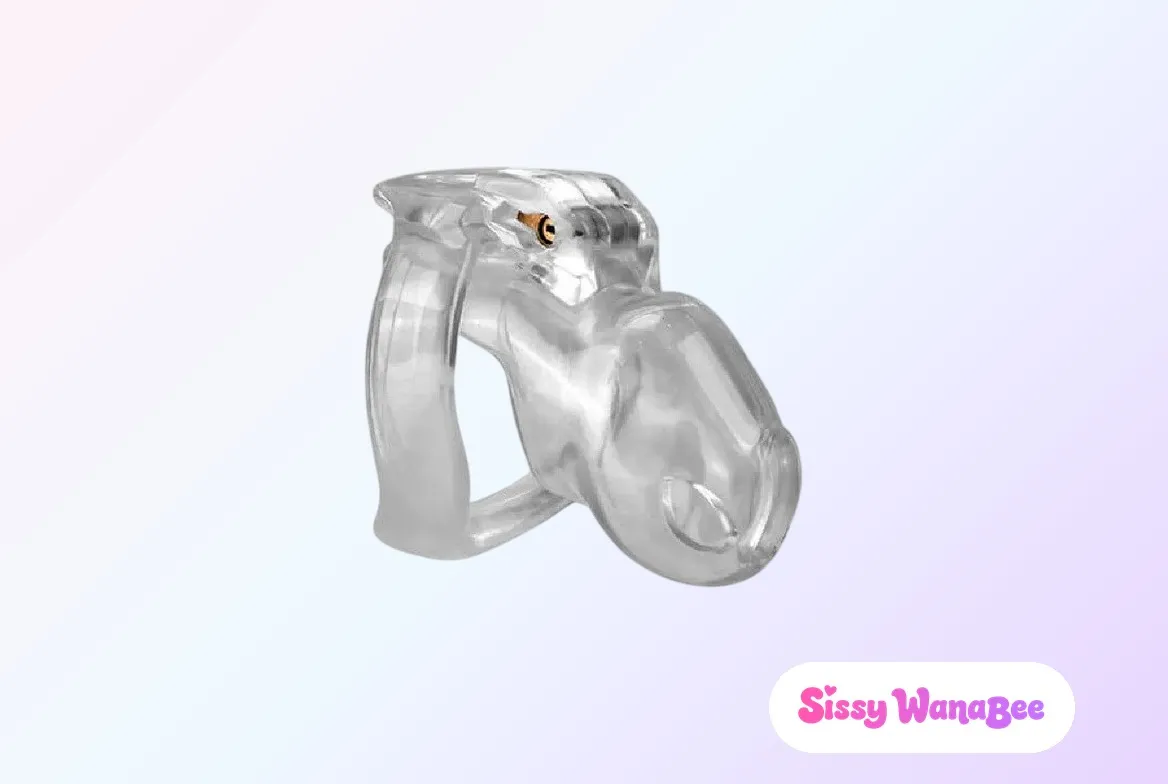
Medical-grade resin is what most modern beginner cages are made of, and there is a reason for that. It is featherlight, around fifty grams for a full cage, which is light enough that your body genuinely forgets it within a week. It takes body temperature almost immediately, so it is never cold against you. It gives a millimetre or two under pressure, which your body will thank you for on the third night. It is silent under clothing. Its only real signs of age are cosmetic scratches, and its only real demand is that you keep silicone-based lubricants away from it, because they degrade the material over time. Water-based only, always.
Resin is the material of the daily cage, the work cage, the learning cage. It asks almost nothing of you, which is exactly what a first cage should ask.
Stainless Steel : The Serious Answer
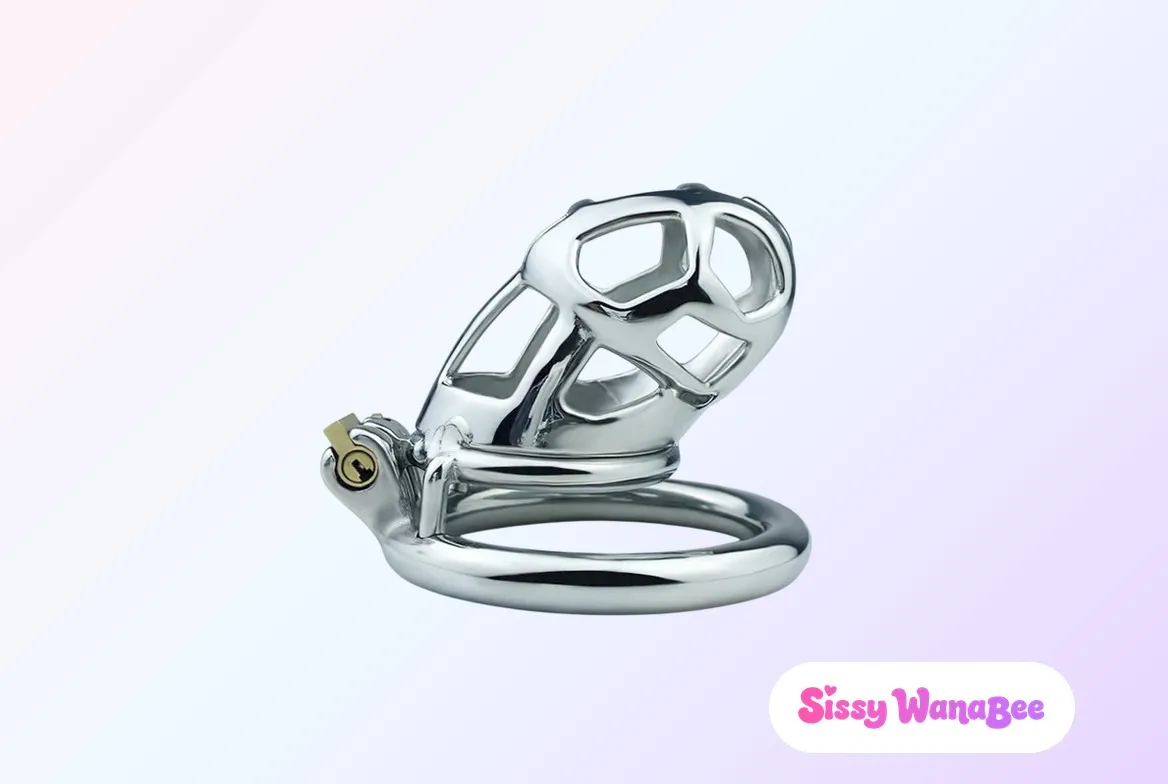
A good steel cage, and by good I mean 304 stainless, polished, seamless, no welds for skin to find, is a different animal entirely. It weighs three times what resin does, around 170 grams for a standard cage. It is cold for the first three minutes and then warmer than resin ever gets, because steel absorbs and holds body heat instead of merely tolerating it. It does not flex. Not a millimetre, not under any pressure, and your body learns that fact at around three in the morning during the first week. It does not scratch, does not age, and still looks new years in. And it announces itself to every airport scanner it ever meets, so it is a cage that stays home or travels in checked luggage.
Steel is the material of the second cage. Not because beginners are unworthy of it, but because everything steel does well is wasted on a body that has not yet learned the basics, and everything steel does harshly lands hardest on exactly that body.
Silicone : The Soft Door
Silicone is the gentlest way into the practice and the least serious way to stay in it. It is the softest material on the market, flexible enough that it cannot pinch, forgiving enough that a slightly imperfect ring size still works, and hypoallergenic enough to be the safe baseline for sensitive skin. Those are real virtues, and for some sissies they decide the whole question. The honest costs : it flexes, which means determined bodies have escaped silicone cages, so it is a poor tool for serious keyholding. It degrades faster than either rival, two to three years of regular wear before replacement, faster still if silicone lube ever touches it. And it is soft enough that some wearers barely register it as present, which defeats half the point of being locked.
Silicone is a first cage for sensitive skin, or a gentle side door for a sissy whose biggest fear is the cage hurting her. It is not a keeping material.
| Material | Weight | Against the skin | Forgiveness | How it ages | Best as |
|---|---|---|---|---|---|
| Resin | ~50g | Warm quickly, quiet | Flexes a millimetre | Cosmetic scratches | The first cage, the daily |
| Steel | ~170g | Cold, then body-warm | None at all | Stays new for years | The second cage, the deep evenings |
| Silicone | Lightest | Soft, barely there | The most forgiving | Replace every 2-3 years | Sensitive skin’s first cage |
What Steel Actually Changes on the Body
The specifications tell you steel is heavier and harder. They do not tell you what that does to a practice, so let me, because I have watched it happen to my own sissy at close range.
The weight is the first education. One hundred and seventy grams is nothing in your hand and unmistakable at your hips. For the first week a sissy in steel feels every stair, every chair, every change of direction, the way you feel a watch after years of bare wrists. Then, somewhere around day ten, the weight stops being a sensation and becomes a presence. Wearers reach for the same word again and again : grounding. The steel pulls a spiralling mind back into the body, hour after hour, without being asked.
The hardness is the second. Resin gives a small mercy of flex when the body presses against it at night. Steel gives nothing, and the body learns the new arithmetic in about a week of interrupted sleep. This sounds like a flaw. Ask a sissy two weeks in and she will tell you, slightly embarrassed, that the unforgivingness is the point. A rule that bends is a suggestion. Steel does not make suggestions.
And the presence is the third, the one nobody can quite explain and nobody who has worn both denies. My Evy said it in her review of her own steel cage, and I have never found a better sentence : the resin protected her. The steel held her.
Resin protects a sissy. Steel holds her. Those are not the same verb, and her body knows the difference long before her mind finds the words.
— Mistress Bee
The Second-Cage Test : How I Knew Evy Was Ready
Evy did not ask for steel. She had a small speech prepared about why she did not need it, the evening I set the velvet pouch on the table, and I let her give the whole speech before I opened the pouch. That is the first thing to understand about the second cage : the readiness shows up in the body and the practice long before it shows up in the shopping cart, and a keyholder who is paying attention sees it first.
Here is what I was looking at. Use it on yourself honestly, sissy, or better, let the woman who holds your key use it on you.
You are ready for steel if :
And you are not ready if :
If the first list is you, then the cage we chose for exactly this moment is the FRRK Mamba F3153 : seamless 304 stainless, mirror-polished, an integrated brass lock, and honest money at a fraction of what the custom steel houses charge, where premium cages start around $90 and climb well past $200. Evy’s fifteen days and everything since are in the full Mamba review.
If You Do Not Own a Cage Yet : Start With Resin
Every so often a sissy reads a page like this one first and decides to skip the apprenticeship, because steel is clearly the serious material and she is nothing if not serious. Let me take that idea from you gently, darling, before it costs you a miserable fortnight.
The gentle resin cage Evy started in, and still wears most days, is the Holy Trainer V4. Measure yourself properly first, always, and if you would rather weigh the beginner options side by side, the five-cage beginner guide covers resin, silicone, and one deliberately lightweight steel for the sissy who insists on metal from day one.
The Rotation : Why You Will End Up Keeping Both
Here is the part the “versus” framing gets wrong, and the reason this page is called a second-cage guide rather than an upgrade guide. Steel does not replace resin. In practically every long-running practice I know, including ours, the two settle into a rotation, because they are good at different evenings.
The resin is the daily. Work weeks, gym mornings, travel, the long ordinary stretches where the cage’s job is to be present and invisible at once. The steel is the deepening cage. The planned Friday evening, the locked weekend, the weeks when the practice wants weight. In our house the V4 goes on for the world and the Mamba goes on for us, and Evy knows exactly which evening it is the moment she sees which cage is out.
It took a first full month in the cage for Evy’s body to earn that rotation, and if you have not done a long stretch yet, the 30-day guide is the honest map of what that month does. If you are already well past it and the rotation is becoming a way of living rather than a set of evenings, long term wear has its own demands, and the hygiene is the smallest and least negotiable of them. And because the second cage is felt by both of you, it is worth saying out loud : this is a purchase to decide together. If the key lives with your partner, the relationship side of chastity is where that conversation starts easiest.
Care : The Small Differences by Material
The hygiene canon does not change with the material : a daily unlock for the shower, mild unscented soap on cage and skin, air-dry, and a cool hairdryer through the cage interior before re-locking, because a towel never reaches inside. What changes is what each material tells on you.
None of this is burdensome. It is ten minutes a day, and the ten minutes are part of the practice : the one window where you look at your own skin, answer for it, and lock back up on purpose instead of by momentum.
From Evy : The Weight, From the Inside
A note from me, because Bee asked me to tell you the half she could only watch.
I spent four years in resin telling anyone who would listen that I would never need steel. I had the speech ready the night the pouch came out, and I gave it beautifully, and Bee listened with the particular patience she saves for watching me be wrong. Then the Mamba was in her hand, small and serious and polished, and I stopped talking.
What I can tell you from inside the first week is that steel is colder, heavier, and stricter than anything resin prepared me for, and that none of those words mean what I feared. The cold lasts three minutes. The weight lasts a week, and then it turns into something I can only call company. The strictness never leaves, and somewhere around day ten I understood that I did not want it to.
I thought steel would feel like more cage. It feels like more her. That is the entire difference, and no specification sheet was ever going to tell me.
One Small Ritual, Before You Decide
You will do one thing before any money moves, sissy, and yes, I mean it.
Tonight, take the cage you already own out of its drawer and hold it in your open hand for one full minute. Just hold it, and answer one question honestly : does it still feel like a decision, or has it become furniture? If your chest tightened a little at furniture, you have your answer, and you are closer to steel than you were pretending to be. Either way, you do not order tonight. The second cage is a decision a sissy sleeps on at least once, because I said so, and because the waiting is the first thing steel will ever ask of you. It may as well begin now.
Frequently Asked Questions
Is a steel chastity cage better than resin?
Neither is better. They are built for different jobs. Resin is light, warm, forgiving, and invisible, which makes it the right daily and travel cage. Steel is heavy, rigid, and present, which makes it the deepening cage for evenings and long locked weekends. Most experienced wearers end up with one of each in rotation rather than replacing one with the other.
Can my first chastity cage be steel?
We recommend against it. A first cage has to teach you your sizing and let your body learn that being locked is livable, and both lessons want a forgiving material. Steel doubles the adjustment and punishes every sizing error. Start with resin or silicone from our beginner cage guide, and if you insist on metal from day one, choose a deliberately lightweight steel design rather than a full-weight cage.
How heavy is a steel cage compared to resin?
Roughly triple. A standard steel cage like the FRRK Mamba weighs around 170 grams against roughly 50 for a resin cage like the Holy Trainer V4. You feel every step for about a week, and then the weight settles into a background presence most wearers describe as grounding rather than tiring.
Will a resin cage pass through airport security?
More gracefully than steel, but be honest with yourself about the details. Most resin cages still carry a small metal lock pin, so no cage is officially scanner-proof. In practice, a resin cage is the sensible travel choice and a steel cage is not : full stainless steel triggers most modern scanners. Frequent flyers wear resin on travel days and pack the steel in checked luggage, if it travels at all.
Is a silicone chastity cage any good?
For the right sissy, yes. Silicone is the softest and most forgiving material, hypoallergenic, and the lowest-anxiety way into the practice, which makes it a legitimate first cage for sensitive skin. Its limits are real, though : it flexes enough that it is weak as a serious keyholding tool, and it needs replacing every two to three years. Treat it as a doorway, not a destination.
What lubricant should I use with each cage material?
Water-based, unscented, for everything, and treat that as a rule rather than a preference. Silicone-based lubricants degrade both resin and silicone cages over time. Steel itself tolerates any lubricant, but your skin is in the equation too, and a plain water-based lube is the kindest choice for the ring area regardless of the cage material.