
On this page
- Why Chastity Strengthens Relationships, When Done Right
- How to Introduce Chastity to Your Partner
- The Keyholder’s Role: Control With Care
- Negotiation: Rules, Limits, Safewords
- Maintaining Intimacy Without Intercourse
- When Chastity Isn’t Working
- The Way It Grew in Our Marriage
- Frequently Asked Questions
You want the cage, darling, and you have not said it out loud at home yet. That is why you are here, reading about relationships instead of reading about resin and ring sizes. You are not looking for permission to want it. You already want it. You are looking for the way to say it to her without breaking anything. Good girl. That is exactly the right order to do this in.
So let me tell you what most articles get wrong about chastity in a relationship.
They write it as if it were something one partner does to the other. A cage placed by the dominant. A key carried away by the keyholder. A trial endured by the locked. The vocabulary itself sets the relationship up to fail.
That is not what chastity is, when it works. When chastity works in a couple, it is something both partners step into together. A structure they build. A practice they tend. A dynamic that draws them closer rather than further apart.
I have lived this for five years now with my Evy, and I want to tell you, plainly, what I have learned. Sit down. This one matters.
Why Chastity Strengthens Relationships, When Done Right
Most couples I have spoken to about chastity arrive expecting one of two things: that the cage will spice up their sex life, or that the cage will free the dominant partner from the labour of managing the submissive one’s desire.
Both expectations miss the deeper thing chastity actually does.
What chastity actually does, when it is done well, is redirect the entire current of attention in a couple. If the word still sounds like deprivation to you, read first on chastity as redirection rather than denial, because that distinction is the whole of it. The energy that used to flow toward orgasm and release stops being drained off in those moments and starts pooling into the daily life of the relationship. The locked partner becomes desperately attentive: to gestures, to words, to the small invitations a partner makes, to the way she crosses the room, to the smell of her hair when she leans down to kiss the top of his head. The keyholder becomes more present too: to the locked partner’s emotional weather, to their needs, to the small noises they make trying to be quiet about an erection the cage will not allow, to the daily rituals of care and reassurance the practice asks for.
In couples who understand this, chastity is more than a sex toy. It is a relational practice that happens to involve a piece of metal and a key.
You will find, if you do this seriously and with each other, that the conversations get longer. The mornings get gentler. The nights get much more inventive, in ways neither of you may have known you wanted. The little disagreements, the small irritations, the things you used to brush past, all of it begins to be tended to, because the practice cannot survive on neglect, and the body in the cage is a constant, sweet reminder that there is something to tend to.
That is the real gift, my darling. Not the denial. Not the cage. The shared attention the cage demands.
A chastity practice done badly, on the other hand, is a chastity practice done to someone. A cage placed without conversation. A key carried away as a trophy. A submissive left alone with their frustration and asked to be grateful. That is not chastity. That is loneliness with extra steps.
How to Introduce Chastity to Your Partner
If you are the one who wants to bring chastity into your relationship, the conversation matters more than the cage. And before you open your mouth, sissy, hear one thing: you are not confessing a flaw. You are offering her a key. Carry yourself accordingly.
I want you to lead with curiosity, not with desire. Frame it as a structure you would like to explore together, not as something you need them to do for you. The latter creates obligation. The former creates an invitation.
Choose a quiet moment, well outside the bedroom. Not after sex. Not in the middle of an argument. A weekend morning over coffee is ideal. Your partner needs to receive this calmly, with curiosity, not in a heightened state where every word is amplified.
Here is the structure I give to the sissies who write to me about this conversation:
One instruction from me before that conversation, and it is the only one in this article. Write your why-sentence down first. One sentence, in your own hand, that begins with I want us to and does not contain the word cage. Carry it with you for a full week before you speak. If the sentence still feels true after seven days of carrying it, the conversation is ready. If it does not, you have lost nothing, and I have saved you something.
If your partner is not ready, do not push. A reluctant keyholder is worse than no keyholder at all. Read together. Let the idea sit. Bring it up again in a few weeks if it still feels alive. Sometimes the best chastity practice begins six months after the conversation that introduced it.
The Keyholder’s Role: Control With Care
If you are the one being asked to hold the key, I want to speak to you for a moment, my dear.
What you are being asked to take on is more than a piece of metal. You are being asked to become a witness. A witness to your partner’s daily life, their moods, their patience, their small triumphs and small frustrations, in a way that goes beyond what most relationships ever ask of either party.
This is not a fantasy of dominance. This is a labour of attention.
A good keyholder does three things, in my experience:
Welcome it.
If you came to keyholding expecting to take, take, take, and give little, you will find that the practice corrodes the relationship rather than feeds it. The locked partner is not your prisoner. They are entrusting you with a piece of themselves. The right response to that trust is more care, not less.
I came to keyholding by accident, with my Evy. What I learned is that the cage made me a more attentive partner, not a more powerful one. That is still the part I am most grateful for. The practical half, where the key lives and what becomes of the spare, is written out on its own page, for the evening you are actually holding one.
Negotiation: Rules, Limits, Safewords
Chastity is a practice that lives or dies on the conversation that frames it. Skip this part, and you are gambling.
Before the cage goes on for the first time, you need to negotiate four things together, calmly and explicitly:
1. Duration and unlock cycles. How long will the first session run? When and how often does the cage come off? Will there be milking sessions, full unlocks, supervised cleaning? Decide a structure that fits your life, not someone else’s chastity diary online. A weekend pattern, a one-week pattern, a monthly pattern: any of these can work, as long as both of you have agreed. If you are weighing a longer first commitment, Evy’s account of the shape a first thirty-day stretch can take will show you what the bigger numbers actually feel like from the inside.
2. Hard limits. What is off the table even within the practice? Some couples leave bedroom intimacy fully on the menu, with the cage simply changing what kind of pleasure happens. Others move toward greater denial. Both are valid. What is not valid is leaving the question vague and discovering, in the middle of the second weekend, that you had different assumptions.
3. Safewords. A safeword is not a kink prop, my darlings. It is a safety device. It is the signal that something has gone wrong physically (pain, swelling, circulation issues) or emotionally (genuine distress, not playful frustration), and that the cage comes off, now, no negotiation.
I tell every couple I work with: choose a safeword neither of you would say in regular conversation, agree it works on both sides, and honour it without question the first time it is used. The practice survives the first use of a safeword. It may not survive the failure to honour one.
4. Renegotiation rhythm. Set a date, three or four weeks out, to sit down together and review. Is it working? What has shifted? What needs to change? Chastity is not a static contract. It is a living agreement that grows as the two of you do.
What a broken rule costs between those reviews is a separate question, and the guide to sissy rules and correction answers it : a price decided in advance, small, and paid in the open, never a punishment improvised in the heat.
Maintaining Intimacy Without Intercourse
A common worry, when couples first consider chastity, is that the locked partner will become sexually unavailable. This is a misunderstanding worth dispelling.
Chastity does not end intimacy. It changes its centre of gravity.
What you will find, if you commit to this practice with imagination and tenderness, is that your sex life expands rather than contracts. Without the easy default of intercourse and orgasm, you will both be invited (forced, even, in the gentlest sense of the word) to discover the rest of the body, the rest of the senses, the rest of intimacy.
Some of what becomes available to a couple in chastity:
Chastity does not end intimacy. It changes its centre of gravity, and asks you both to discover what was always there, beyond the obvious.
— Mistress Bee
When chastity is working, the couple’s sexuality is not poorer for the cage. It is richer, more attentive, more imaginative. That is the real prize.
When Chastity Isn’t Working
I have to be honest with you, darlings: chastity in a couple is not always the right practice. Sometimes it adds to the relationship. Sometimes it strains it. Knowing the difference is part of doing this responsibly.
None of these mean the practice is doomed forever. They mean the practice needs a pause, a conversation, and possibly a renegotiation. Sometimes a couple comes back to chastity after six months away and discovers it works far better the second time, with what they have learned in the interval.
What I want you to refuse, on both sides, is the temptation to grit your teeth and continue. Chastity is not a discipline practice you complete. It is a relational practice you live. If it stops feeding the relationship, it has stopped doing its job. There is no virtue in maintaining a chastity contract that is making either of you smaller.
Stop. Talk. Adjust. Or stop entirely. The relationship is what matters. The cage was always meant to serve it, never the other way around.
The Way It Grew in Our Marriage
I want to leave you, before the questions, with a small piece of our story.
The first time my Evy and I tried chastity, it was for a single weekend. We did not own a permanent cage. We did not yet have language for what we were doing. We were both nervous in a quiet, private way, the way you are when you are trying something that might change something.
What we discovered, that weekend, was that the practice did something neither of us had expected. It made us both more present. She moved through the rooms of our apartment with a softer attention, a near-constant low arousal she could not act on, which had to find somewhere to go. I noticed things about her I had stopped noticing in the comfortable years of marriage. She kissed me more, knelt for me without being asked, woke me on Sunday morning with her mouth, and not because she expected anything back, but because the cage had quietly rewired what back even meant. We talked more. We touched more. We slept entwined.
The next week, we ordered a proper cage.
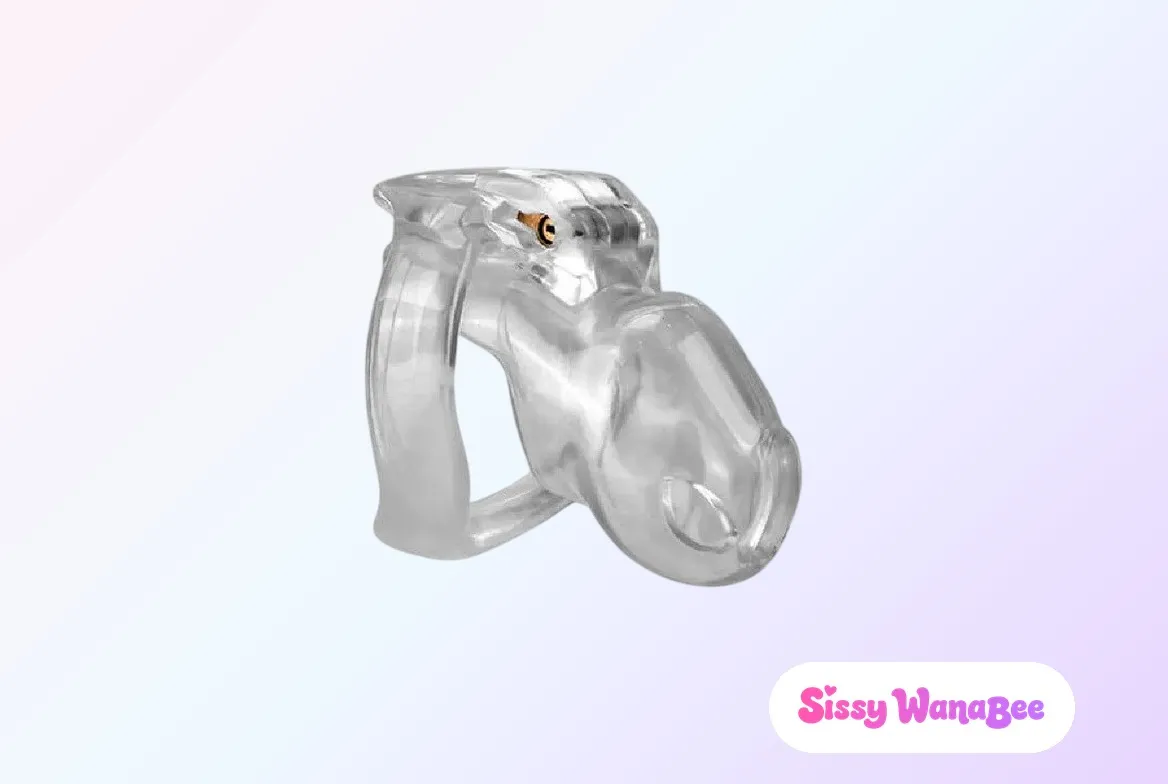
That was five years ago, and the practice has since become one of the foundations of our daily life together. Not the only one, and not the largest one, but one of the foundations. The cage turned out to be the small, locked centre of something wider, and if you want to see what a female-led dynamic looks like beyond the cage, that is the larger room this practice opens into. It has had pauses. It has had renegotiations. It has had weeks where we lost the thread and had to find it again.
What it has never become is a chore. Because we built it together, every step of the way, and we keep building it.
That is what I want for you, my darlings. Not a practice borrowed from a script, but a practice slowly made between two people who care about each other. The cage will hold what you put into it. Make sure what you put into it is love.
The questions below are the ones couples actually ask me, in the letters and in our own kitchen.
Frequently Asked Questions
How long should the first session be?
Start small. A single weekend, twenty-four to seventy-two hours, is plenty for a first attempt. Resist the urge to begin at thirty days. The first session is for learning what the practice feels like in your bodies and your communication, not for proving anything.
What if my partner says no?
Then they have given you an honest answer, which is the only useful kind. Do not push. Read together if they are open to it. Bring the idea up again in a few weeks. Sometimes a no in May becomes a curious yes in September. And sometimes the no is a final no, and your job is to honour it. A practice begun under reluctance corrodes the relationship faster than no practice at all.
Can both partners be locked at the same time?
They can. Many couples experiment with mutual chastity, where both partners are locked and each holds a key to the other. This shifts the dynamic from dominance and submission toward shared discipline, and works beautifully for some couples. The same negotiation rules apply. The same safewords matter. Try a short version first.
What about anniversaries, holidays, special occasions?
Plan unlocks for them. Chastity is not a punishment of joyful moments. A wise practice has built-in moments of release that the couple looks forward to together. A weekend trip, an anniversary, a birthday: these are exactly the kinds of unlock cycles that keep the practice generous rather than depleting.
Should we tell anyone we are doing this?
That is entirely yours to decide together. Most couples keep the practice fully private, and there is nothing wrong with that. Some find a single trusted friend or therapist to talk to, especially in the early months. What matters is that you and your partner are aligned on what is shared and what is not. A leak that one of you did not consent to can damage trust badly.