On this page
Sit down, darling.
If you arrived here googling what is crossdressing, or what does crossdressing mean, or some quieter, more honest version of those phrases at two in the morning, then you already know more about yourself than the search bar gives you credit for. You followed the pull. You found this page. That is the part most people never do.
So let me give you the answer the medical sites and the porn sites both refuse to give you. Plainly, without diagnosis, without spectacle.
What Crossdressing Actually Means
Crossdressing is the practice of wearing clothing traditionally associated with another gender. That is the whole definition. The clothes are the surface ; the pull underneath is what brought you to the search bar tonight.
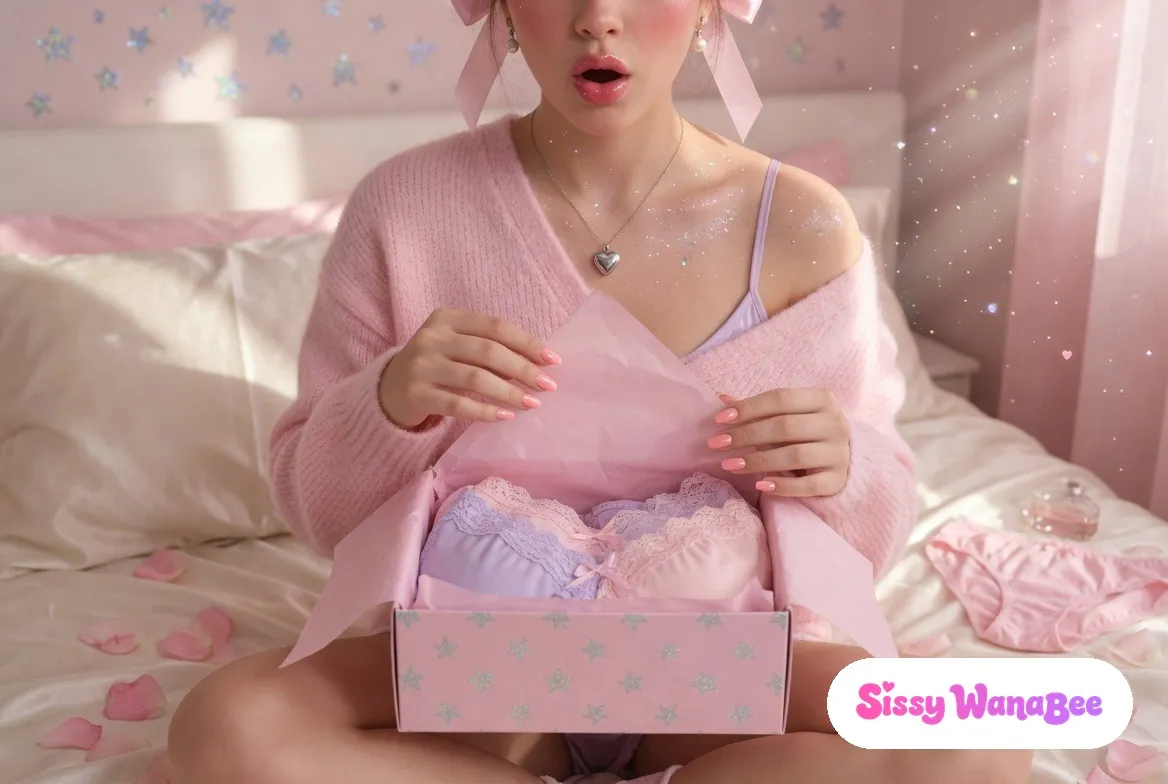
It can be a single pair of panties in the bottom of a sock drawer, soft against her skin in a moment she stole from the day. It can be a full evening of lingerie, dress, heels, painted face, the works. It can happen once a year in private, or every single day under a suit. It can be tender, ritual, erotic, meditative, all of those in the same hour. It belongs to whoever practices it, and it looks different in every life it touches.
Most crossdressers are men who wear feminine clothing, though women crossdress too and have for centuries. What unites all of them is the same human thing : the desire to inhabit a part of themselves that the everyday world doesn’t quite make room for, the softer one, the wanted one, the woman.
For some, that pull stays light. A drawer, a private evening, a small secret kept against the edge of a marriage. For many others, the pull keeps asking for more. More clothes, then more femininity, then more structure, then a name softer than the one she was born with, then the cage, then the key in someone else’s hand. That last part is where crossdressing quietly becomes something else. We will get there.
Crossdressing Is Not the Same as Being Transgender
This distinction matters, so let me be clear with you.
Being transgender means a person’s deeply felt gender identity differs from the sex they were assigned at birth. Trans women are women. Trans men are men. Their gender is not a costume. It is who they are, all the time, with or without clothing.
Crossdressing, by contrast, is about clothing and presentation. The vast majority of crossdressers identify with their birth gender and have no desire to transition. They are men who love wearing dresses. They are women who love wearing suits. The clothing is the practice, not a declaration of gender identity.
Some people start by crossdressing and later discover they are trans. Others crossdress for fifty years and remain confidently in the gender they were born into. Both paths are honest. Neither is a wrong turn. The mistake is to assume one means the other.
Crossdressing Is Not Drag
Drag is performance. Drag is theater, art, satire, and craft, performed for an audience, usually with stage names, exaggerated makeup, and elaborate costumes. Drag queens and kings are artists. Their work is public and intentionally larger than life.
Crossdressing is personal. It happens in bedrooms, in private rituals, in quiet moments alone or with a partner who has been let in. There is no audience. There is no character to perform. There is just her, the clothes, and what they make her feel. The one exception is Halloween, when the whole street is in costume and crossdressing for Halloween borrows a little of drag’s audience for a night.
A drag queen takes off her wig and goes home. A crossdresser puts on her panties, exhales for the first time all day, and becomes herself.
A Short History of Crossdressing
You are not the first, darling. You are not even the millionth.
Crossdressing has existed in every culture, in every century, in every part of the world we have records for. The Chevalier d’Éon was a celebrated 18th-century French diplomat who lived openly as a woman for the second half of his life. Joan of Arc led armies in men’s armor. Public Kabuki theater in Japan was originally performed by women dressed as men, before the inversion. Two-Spirit traditions in many Indigenous North American cultures have honored gender-fluid presentations for hundreds of years.
The Victorian era hid it in private parlors. The 1950s pushed it underground entirely. The internet, for all its flaws, gave crossdressers something they had almost never had before : community. A way to find each other. A way to know they were not alone.
That is the lineage she joins when she puts on her first piece of feminine clothing, darling. Very old, very quiet, very real.
Who Crossdresses?
Almost certainly more people than you think.
Studies on this are imperfect, for the obvious reason that crossdressing is still hidden in most lives. Credible estimates suggest that somewhere between 3% and 5% of men in Western countries crossdress to some degree, even if only privately. That is tens of millions of people in the United States alone.
They are doctors and truck drivers. Husbands of fifteen years and bachelors in their twenties. Fathers, sons, soldiers, accountants, teachers. Many of them married. Many with children. Most have never told a single soul.
And a real share of them, beyond a certain point, are no longer just dressing. They are being kept. Called by a softer name in private. Wearing something locked under their suit at work. The closet is crowded, darling. You just couldn’t see it from the inside.
Why Do People Crossdress?
Here is where most articles get it wrong. They reach for clinical categories : transvestic disorder, paraphilia, fetishism. They make a complicated human practice sound like an illness to be diagnosed.
I am not a clinician, and I will not pretend to be. But I have spent fifteen years with my Evy, five of them with my key on her, my schedule on her, my voice in her head most mornings. From inside that dynamic, this is what I can tell you.
Crossdressing is, for most people who do it, an act of self-recognition. It is the experience of touching a part of herself that the world told her to bury. The softer one. The wanted one. The woman. It can be erotic, yes. It can be tender. It can be playful. It can be deeply meditative. It is rarely only one thing.
And for a real portion of crossdressers, the practice keeps asking for more. At a certain point she stops dressing for herself, and starts dressing for someone she has not met yet : a Mistress, a wife who knows, a self that has been waiting. The drawer becomes a wardrobe. The wardrobe becomes a ritual. The ritual asks for a cage. The cage asks for a key holder. One morning she realises she has been quietly trained into a self she did not know she was building.
That is the line between crossdresser and sissy. A crossdresser wears the clothes. A sissy is wearing the clothes for someone, and being kept inside them. Most of you reading this have already started crossing that line, or are looking at it right now in the dark.
What crossdressing is not, in my experience, is a sickness. The pain crossdressers carry usually doesn’t come from the practice itself. It comes from hiding it. From the shame that culture poured over them before they were old enough to refuse it.
Take away the shame, and what’s underneath is almost always something beautiful : a person who simply wants to feel whole, and increasingly wants to feel held.
A Note from My Own Story
You should know, before I send you any further into this site, that I came to this world by accident.
I was not born a Mistress. I never thought of myself as dominant. For the first ten years of our marriage I was simply a wife who loved her partner.
Then, one evening, after a glass too many of wine, my Evy told me her secret. She had been hiding her femininity for years. Quiet online orders, panties tucked away, lipstick worn alone in the bathroom and scrubbed off before I came home. She told me trembling, expecting the worst.
I did not give her the worst, darling. I gave her the only thing I knew how to give. I listened. I held her hand. I told her she was safe.
What followed surprised both of us. As I helped her step into her femininity, first lingerie, then dresses, then makeup, I discovered something about myself. I discovered I loved structuring her. I loved deciding what she wore. I loved the small voice she used when she asked permission. I loved the way she trembled when I said good girl. Two years in, the first cage arrived. By the time I locked her, neither of us was pretending anymore about what she was, or what I was, or what we were doing together.
That is how Mistress Bee was born. Not from fantasy. From love. From a single conversation that opened into five years of training, and Evy’s key, which I still hold today.
I tell you all of this, my darling reader, because whatever you are carrying right now, there is someone who could receive it the way I received my Evy. And if you are the partner of a crossdresser, reading this to understand what your husband has been hiding, the gift you can give is the same one I gave : presence, without judgment. Everything else, including the version of yourself you might discover on the other side of that conversation, follows from there.
So What Now?
If you are reading this and quietly recognizing yourself, feeling the small electric click of being seen, then first: good girl. Now here is what I want you to hear.
There is nothing wrong with you. There never was. You are part of a long, gentle, kinky human tradition. You are not alone. You are not broken. You are very, very welcome here, whether you are a crossdresser who will only ever own a few private items, a sissy who hasn’t named herself yet, or a sissy who already has.
The pace is yours. I am not in a hurry. But we both know what you are looking at.
And if you are not that reader at all, if you are here because you found something in your own house and you are trying to understand a man you love, then this page was written for him and I am still glad you found it. The guide for the wife who has just found out was written for you.
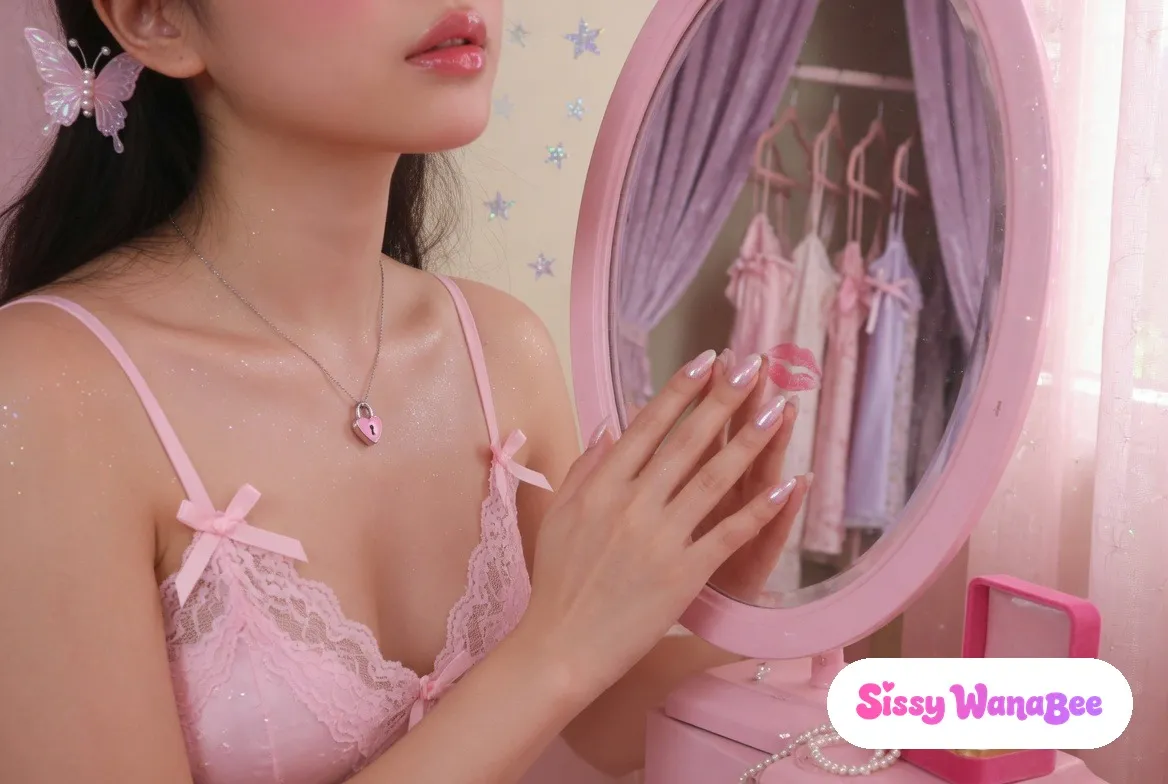
One small thing before you go, and yes, it is an instruction. Tonight, in front of a mirror, give yourself ten unhurried seconds of looking, and do not argue with what looks back. You do not have to name her yet. You only have to stop pretending she is not there. That’s all. That’s the whole instruction.
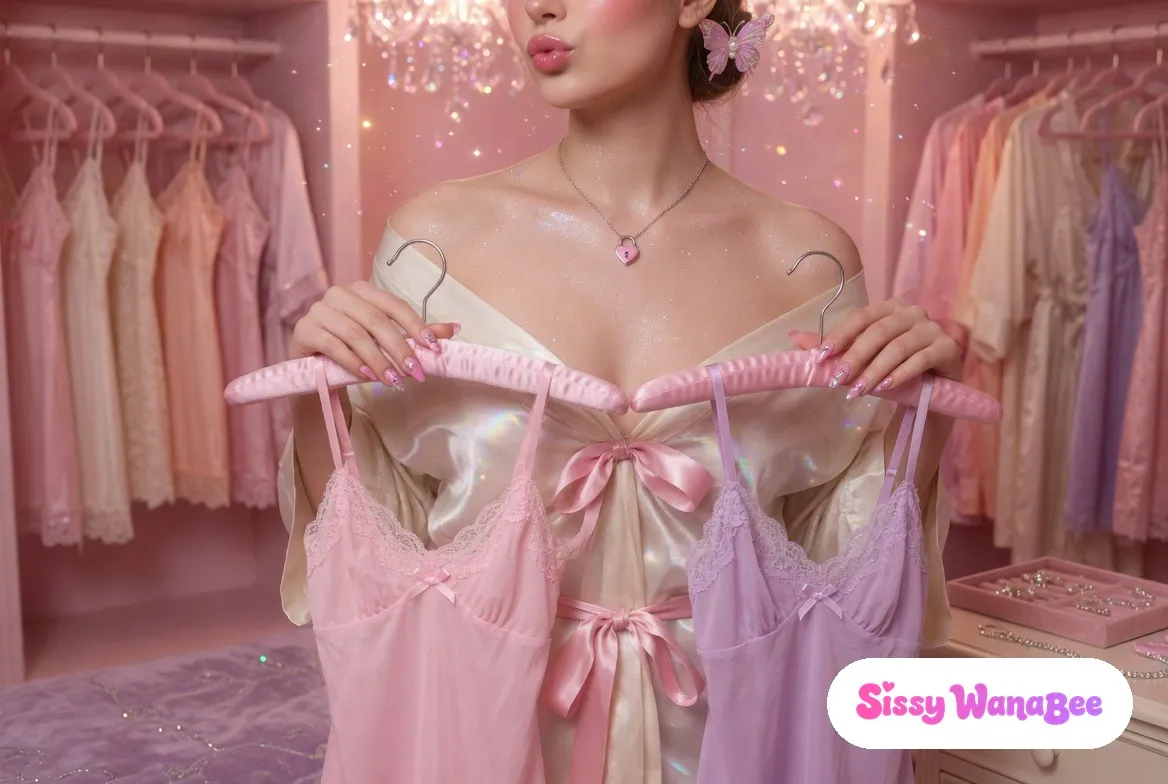
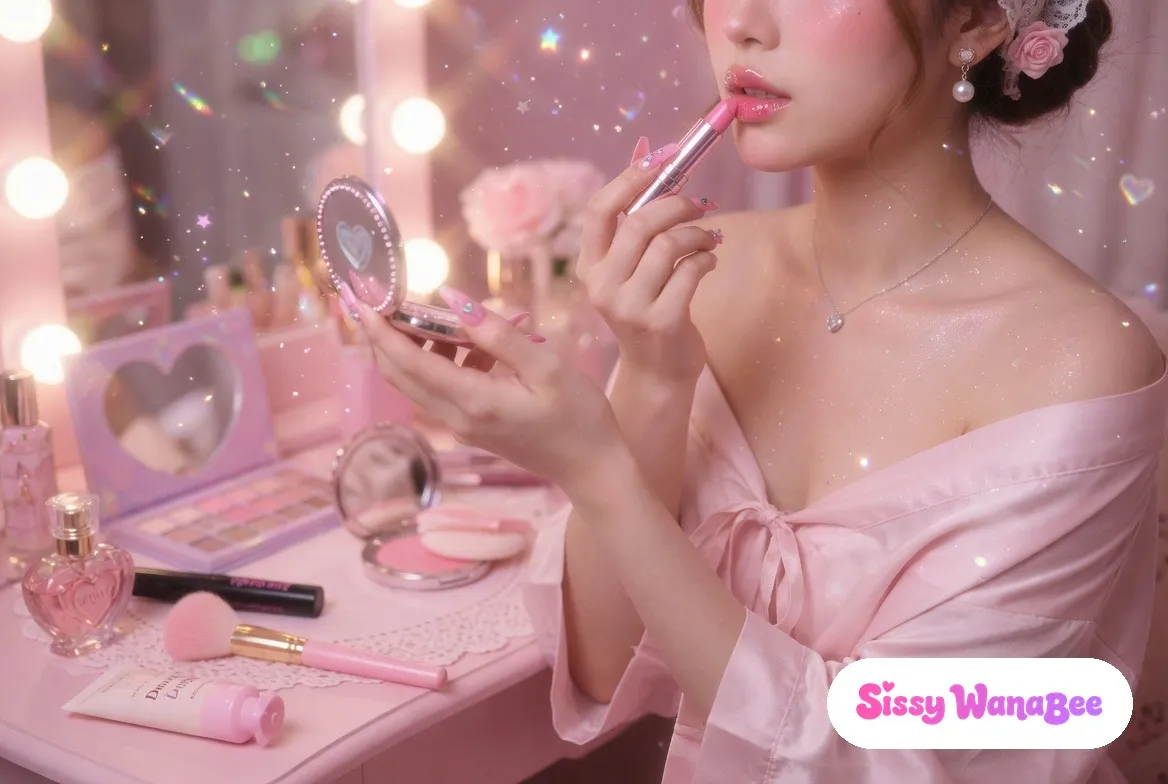
The next step is written for whenever you want it. When you are ready, the path I would walk you down is this: how to actually begin, in private, then building a wardrobe that fits the woman in the mirror, then her first soft makeup look, then the wig that frames it all. And when the secret eventually meets someone you might love, dating as a crossdresser is there for that conversation too. And when you want to find out what kind of sissy you actually are (because most of you reading this already are one, in some shape), the tests are there, written by me, honest, with no flattery.
Frequently Asked Questions
Is crossdressing a fetish?
For many crossdressers, yes, there is a real erotic charge in the act, and there is nothing wrong with that, desire is part of the practice for plenty of us. For others the dimension is more comfort than arousal. Most experience it as a layered blend of comfort, self-expression, sensuality, identity, and yes, sometimes desire. Reducing crossdressing to just a fetish misses the larger truth : it is, above all, an act of self-recognition, and for a real share of us, the doorway into being kept by someone.
Does crossdressing mean I'm gay or trans?
Not at all. The vast majority of crossdressers are heterosexual men who identify fully as men. Crossdressing is about clothing and presentation, not about sexual orientation or gender identity. Some crossdressers are gay, some are bisexual, some are trans, some are women, but most are straight men, and crossdressing tells you nothing definitive about any of those things.
Is crossdressing the same as being a sissy?
No, though the two overlap. A crossdresser wears feminine clothing. A sissy wears the clothes for someone (often a Mistress, often herself in the process of becoming one), inside a frame of submission, ritual, or chastity. Many crossdressers are sissies who haven't named it yet. Many sissies started as crossdressers and crossed a line they can no longer un-cross. If you want to know which side you fall on, the gateway test was written for exactly this question.
Can I crossdress and still be masculine?
Of course, darling. Wearing feminine clothing in private (or in public) does not erase her masculinity. Many crossdressers live entirely conventional masculine lives by day and step into their femininity by evening, and many find that the secret heightens both lives. The two coexist. She is not less of a man for owning a wardrobe that includes silk, and she is not less of a sissy for being competent at her job.
How do I tell my partner I crossdress?
Carefully, calmly, without shame. Choose a quiet moment. Lead with what crossdressing means to you, not what it isn't. Give them time to process. The fact that you are asking the question already says you are doing this right. If you want the full script, the when, the words, and what to do after, I have written one: see Telling Your Partner You Crossdress.
Where do I begin if I've never done this before?
Start small, and start private. A single piece of lingerie that fits. A quiet evening alone. A mirror she trusts. Notice what she feels. Don't rush to label it. The full first-steps guide is in Getting Started with Crossdressing.